


Count the places your team checks to understand how one venue is performing.
For many multi-site operators, the answer is closer to six than one. Mystery audit scores sit in one report. Guest feedback sits in a survey tool. Reviews arrive across Google, TripAdvisor and delivery apps. The sales dashboard and the operations scorecard add two more. A simple question, such as how the Leeds venue is doing, takes half an hour of tab-switching to answer. Repeat that for every venue, then share the results with each general manager, and the picture is out of date before anyone can act on it.
Most multi-site operators have some version of this problem.
The insight gap is the distance between having guest experience data and knowing what to do about it.
The majority of hospitality groups are not short of data. Audits, surveys and reviews all produce plenty of it. The gap opens because each source tells a partial story, in a different format, on a different schedule, to a different person. Three symptoms show up again and again:
Nobody owns the full picture. Audit results go to operations, reviews go to marketing and feedback scores go to the insights team. Each function only sees a slice, and responsibility is fragmented.
Patterns stay invisible. A dip in service scores at one venue and a cluster of slow-service reviews at the same venue are the same problem. In separate reports, they look like two unrelated blips.
Reporting becomes the job. Hours go into pulling figures together for the monthly meeting, which leaves less time to decide what to do about them.
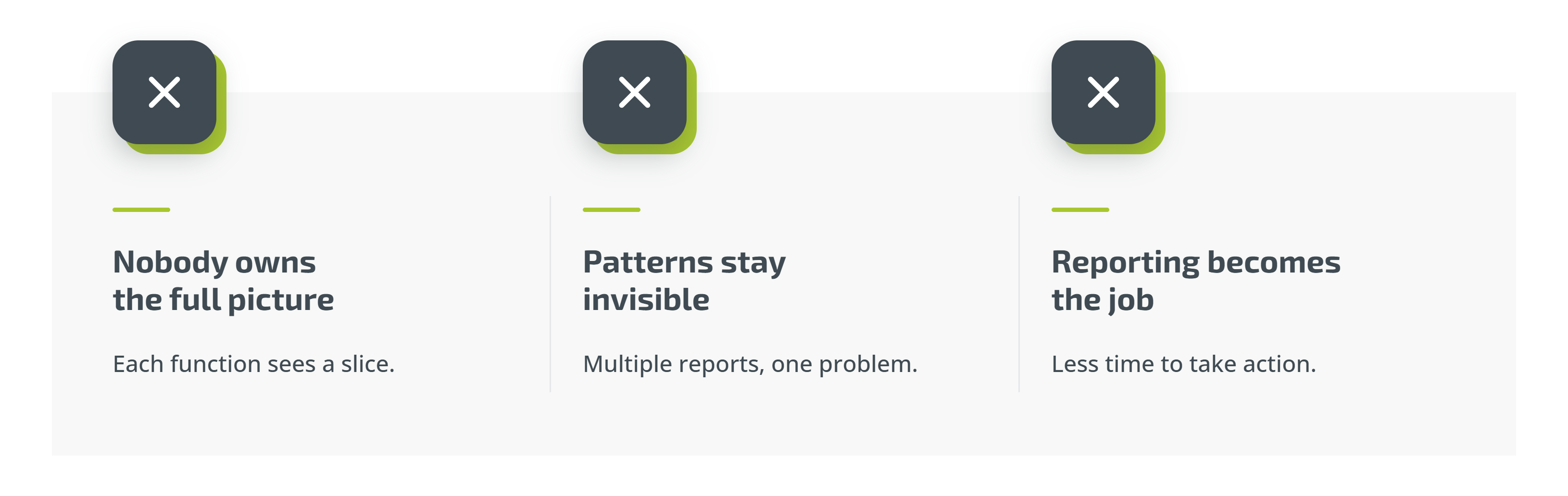
Together, these symptoms make up an all-too-common void in hospitality operations. It narrows when three things happen: the sources are connected, patterns surface without anyone hunting for them, and every insight has a named owner.
A review dip can take a week to notice, another week to agree who should look into it and a third to brief the venue. By then, hundreds of guests may have had the same experience.
Naturally, the floor feels this first. General managers end up running on instinct because the evidence arrives too late to guide the shift in front of them. This isn't to say that instinct is worthless, but it can't tell an operator that Friday evening service has slipped across three venues since the menu change, or that one team is consistently scoring well on cleanliness and poorly on speed.
This lag also creates a quiet cultural problem. When insight arrives late, teams stop expecting it to be useful, and reporting turns into a tick-box exercise.
A quick test shows where an operator stands. At the start of any shift, whether that is a breakfast opening or an evening service, a general manager or operations director should be able to answer three questions within five minutes:
What has changed since the last shift? New reviews, new survey responses and any score that has moved.
Where is the biggest risk? The venue, shift or issue most likely to hurt guest experience this week.
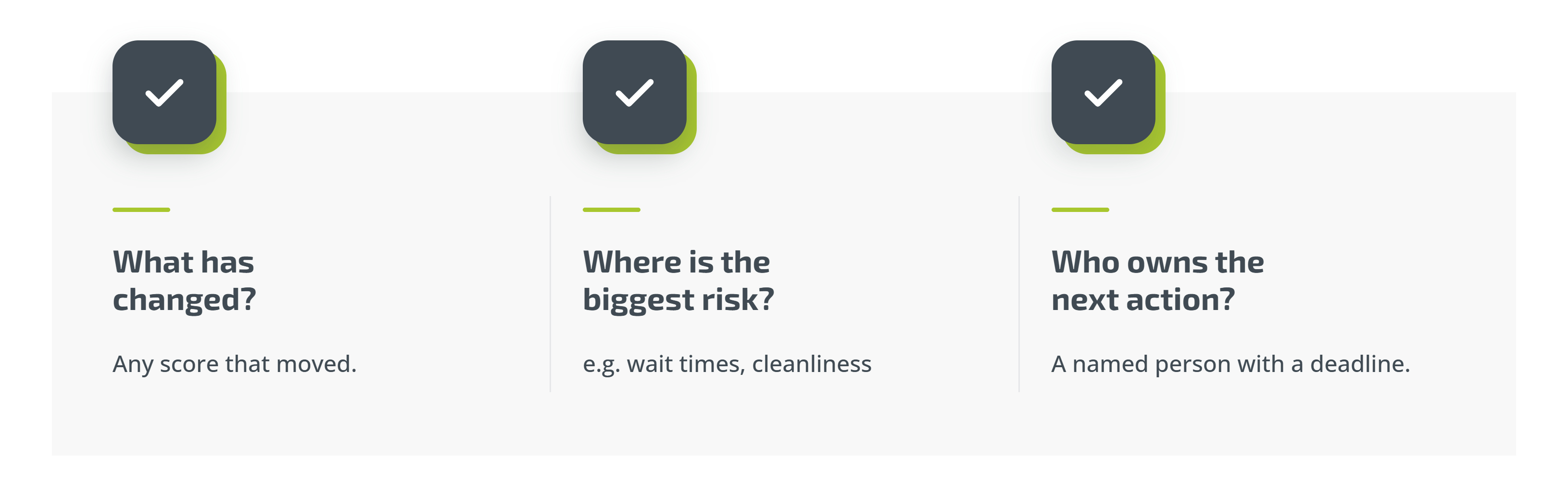
If answering any of these means opening more than one system, the gap is there. If the third question has no clear answer, the data is being collected without being put to work.
Once the gap shows up, the next question is what it costs. Insight only matters when it brings measurable commercial results, and any operator can estimate what a slip costs using their own numbers:
Pick two comparable venues. Choose two of similar size, format and trading pattern, one with strong guest scores and one that lags.
Compare the commercial gap. Put weekly sales, repeat visits and spend per head side by side.
Scale it. Multiply the weekly gap by 52, then by the number of venues that look like the weaker one.
Scores are not the only reason two venues perform differently, so treat the result as a range rather than a forecast. Even a cautious estimate makes the cost of delay visible, and shows why a review dip left alone for three weeks is a commercial issue as well as a reputational one.
The fix is a closed loop: measure, understand, act and improve, in one connected flow. Each step has a common way of going wrong.
Measure from more than one angle. Audits show whether standards are met, feedback shows how guests felt and reviews show what they tell everyone else. Any one alone gives a partial picture.
Understand by reading the sources together. A service dip in an audit and a run of slow-service reviews read as one problem once they sit side by side.
Act with a named owner and a deadline. This is where a lot of operators fall short. Plenty of groups measure well and understand reasonably. The loop breaks between knowing and doing.
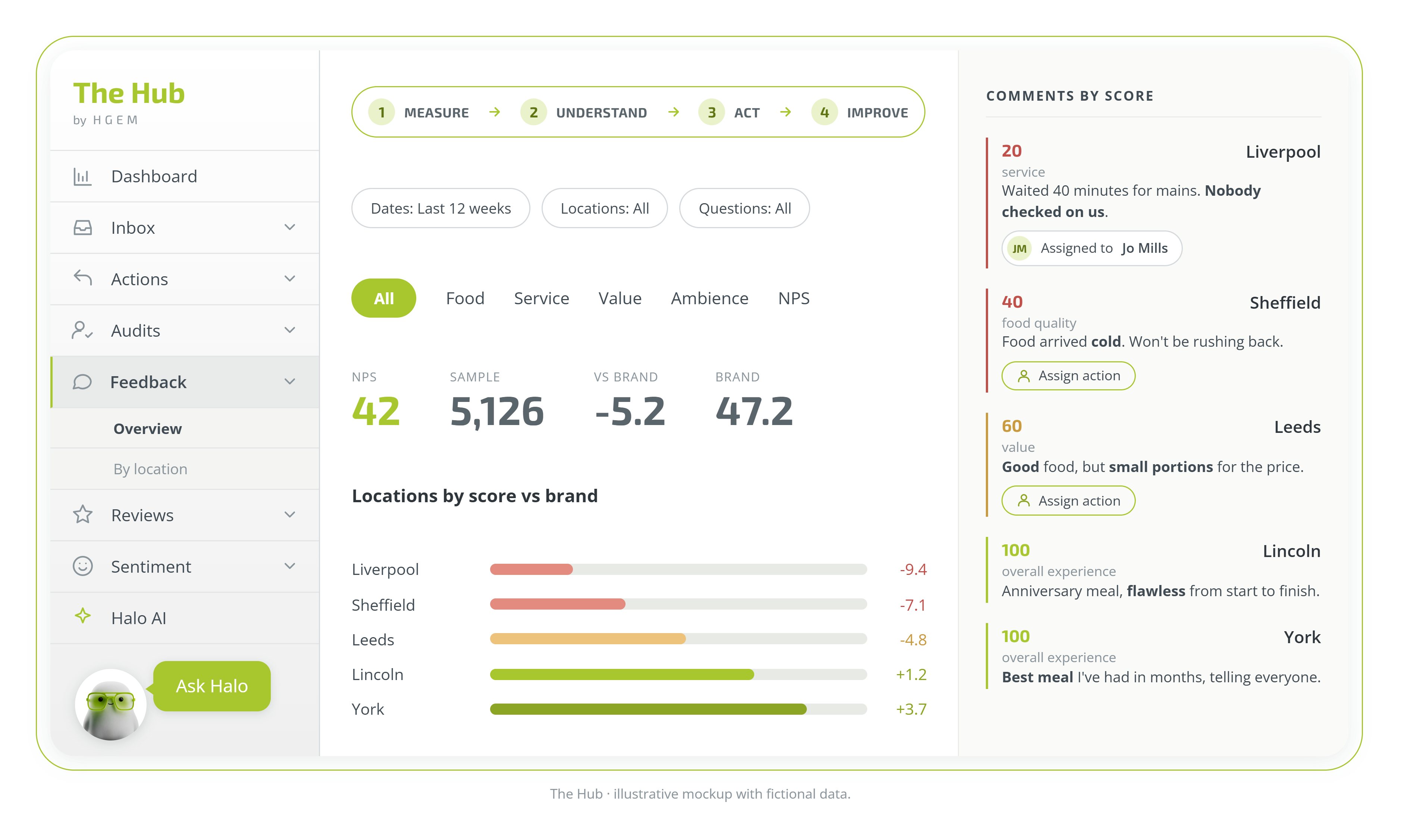
The principle applies whatever tools sit behind it. Take The Hub, which brings together Guest Feedback, Mystery Audits, Reviews, and Product Ratings in one view. Halo, an AI-powered assistant, then turns what they show into clear next steps.
The effect shows up in the numbers. Tortilla improved its NPS by 49 points within 12 months. PizzaExpress lifted its review response rate from 1% to 84% in six months, with a 0.25 star uplift across 370 venues.
The shift is as much about mindset as software, and it starts with moving from reactive to proactive. Reports describe what already happened, whereas a closed loop shows what is likely to happen next, and what to do about it.
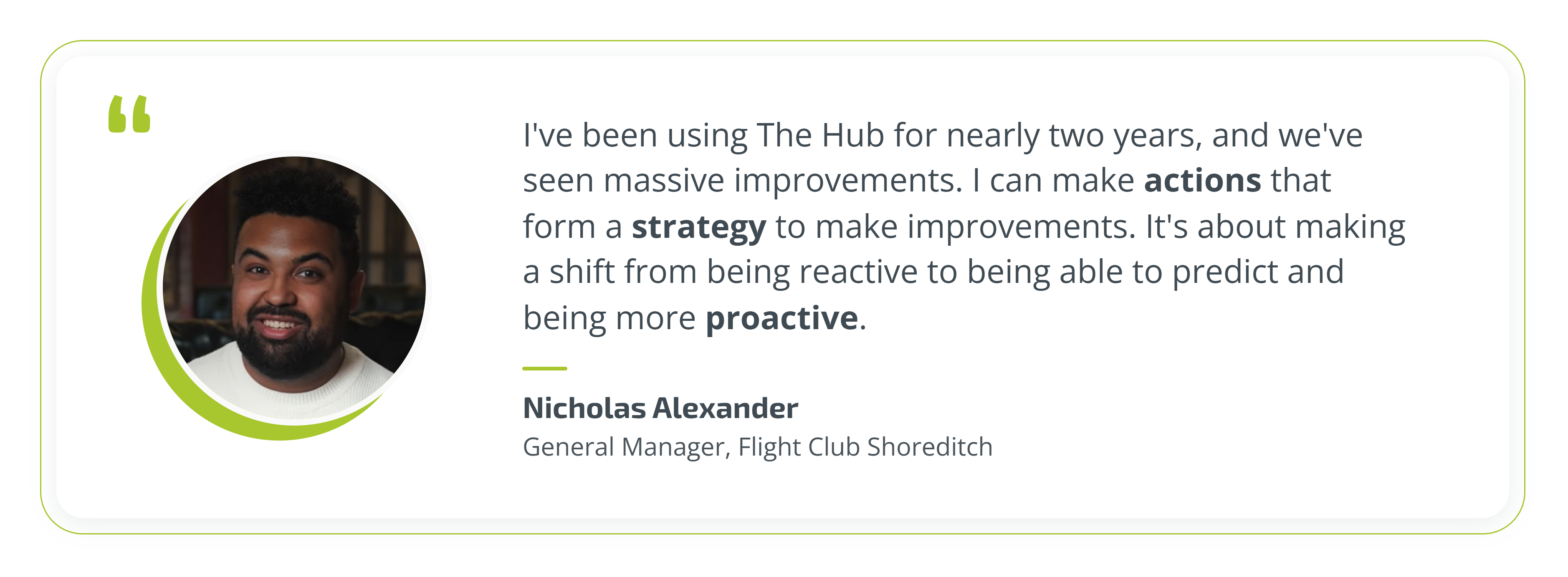
Business Reporter's Best of British Business 2026 series profiles UK companies tackling real problems in their industries. HGEM was named in the series for its innovation in hospitality, specifically its work on closing the insight gap. The full feature, featuring Flight Club, was also published by The Independent.
The feature highlighted three points that apply to any multi-site operator:
The blind spot is structural. Audits, feedback and reviews are collected in separate places, so operators can see a great deal and still miss the pattern across it.
Connection comes before intelligence. Bringing the sources into one view is the step that makes every later step possible.
AI earns its place when it guides action. Halo, launched in October 2025, analyses guest data as it arrives and suggests what to do next, from action plans with named owners and deadlines to review responses in the brand's voice and projected revenue impact.
The bigger story is a shift across hospitality, from reporting on what happened to deciding what to do next. You can see this in practice in Flight Club's guest experience story.
Who should own guest experience insight in a multi-venue group? One named owner at the centre, usually in operations, marketing or insights, and a named owner at each venue for actions. Insight with no owner stays a report.
Does the insight gap only affect large estates? No. It appears as soon as guest experience insight is split across different sources and different people, which can happen with a handful of venues. Size matters less than whether one person can see the full picture for any venue without opening several systems.
How often should a multi-venue group review guest experience insight? There are no hard and fast rules, but operators making real strides in their guest experience tend to look at their insight daily. The aim is a live picture of your venues, not an outdated report pulled out once a month.
Put the start-of-shift test to work on your next shift: what has changed since the last shift, where the biggest risk sits and who owns the next action. Any answer that takes longer than five minutes, or has no clear owner, shows where insight is getting lost on the way to action.


